Hands work hard in Hong Kong. They grip MTR handrails, get washed over and over, dry out in air-conditioned offices and then spend the evening in sticky outdoor air. Nails and cuticles show all of it: peeling tips, ragged edges, hangnails that catch on everything. You don't need a salon visit or a drawer full of products to keep them neat. A few steady habits do most of the work.
Understand what you are caring for
The nail plate is made of layers of keratin. It grows slowly, so any change you make takes weeks to show. The cuticle is the thin layer of skin that seals the base of the nail, and it helps protect the area where new nail forms. That's why the usual advice is to soften and tidy cuticles rather than cut them away.
Most everyday nail problems come from moisture going in and out, not from anything exotic:
- Repeated wetting and drying. Washing up, frequent hand washing and sanitiser make the nail plate swell and shrink, which can lead to peeling.
- Dry indoor air. Long hours under air conditioning pull moisture from skin and cuticles.
- Rough handling. Using nails as tools, picking at polish, or filing back and forth all weaken the edges.
A weekly routine that holds up
Keep it short enough that you'll actually do it. Once a week is plenty for most people.
- Remove old polish gently. Hold a soaked pad on the nail for a few seconds rather than scrubbing.
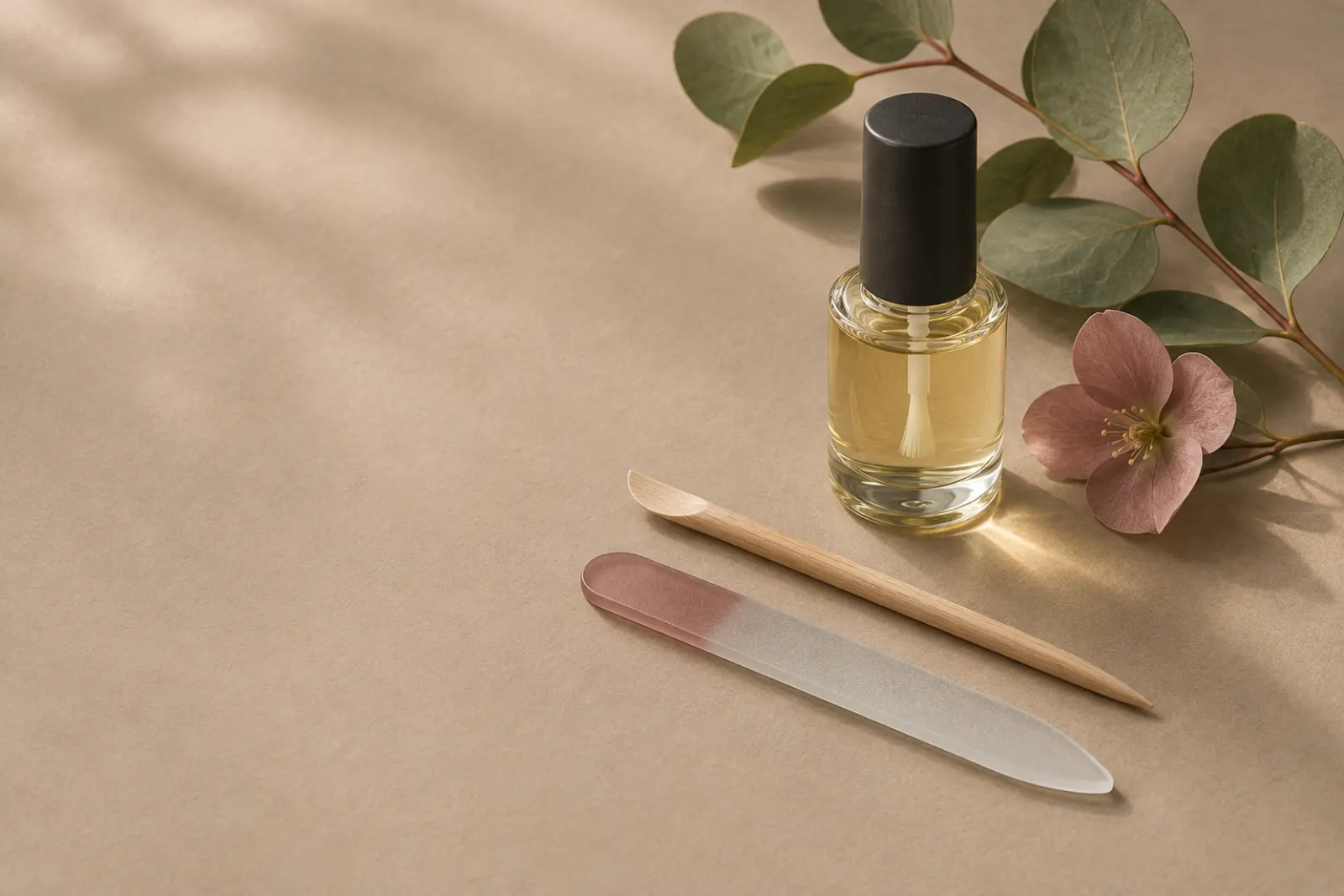
- Shape with a fine file. File in one direction, from the side towards the centre. A gently rounded or squared-off oval tends to snag less than a sharp point.
- Soften the cuticles. After a shower or a short soak in warm water, apply a cuticle oil or cream and leave it for a minute.
- Push back, don't cut. Use a soft towel or a rounded wooden stick to ease the cuticle back lightly. Trim only loose hangnails, and use clean, sharp nippers.
- Finish with moisture. Massage a hand cream into the skin, nails and cuticles.
Daily habits for Hong Kong conditions
Daily care counts for more than any weekly ritual.
- Oil the cuticles at night. One drop per nail, rubbed in, is enough. Squalane, or a light oil blend containing it, absorbs well even in humid weather.
- Keep hand cream within reach. Leave a tube at your desk and another by the sink. Look for humectants such as glycerin or panthenol, plus something richer such as shea or ceramides to help hold the moisture in.
- Wear gloves for chores. Cotton-lined rubber gloves for washing up help a great deal with peeling nails.
- Think about sun exposure. If you hike or spend weekends outdoors, put sunscreen on the backs of your hands as well.
- Dry thoroughly. In humid months, dry your hands and nails properly after washing, especially under rings.
Polish, gels and taking breaks
Polish can protect the nail plate a little, but removing it often can dry the nails out. If you wear long-lasting gel manicures, have them removed properly instead of peeling them off, because peeling takes away surface layers of the nail. Some people find that a few weeks without colour between manicures, with daily oil, keeps their nails more comfortable. A clear base coat can help if your nails tend to stain.
If you're sensitive to fragrance, scented hand creams and cuticle oils may not suit you. Calming ingredients such as chamomile or calendula appear in many gentler formulas, and reading the ingredient list will tell you more than the claims on the front of the pack.
A note on health: this is general information, not medical advice. Changes in nail colour or shape, lifting, thickening, pain, swelling around the nail, or dark streaks are worth showing to a pharmacist, doctor or dermatologist, particularly if they don't go away.
Next steps
Start with cuticle oil at night and hand cream during the day. If you'd like to compare textures and formulas, browse the body care shelf or see more hand and body care. Our guide to reading an ingredient list explains what sits behind the labels, and you can look up squalane and glycerin in the library.