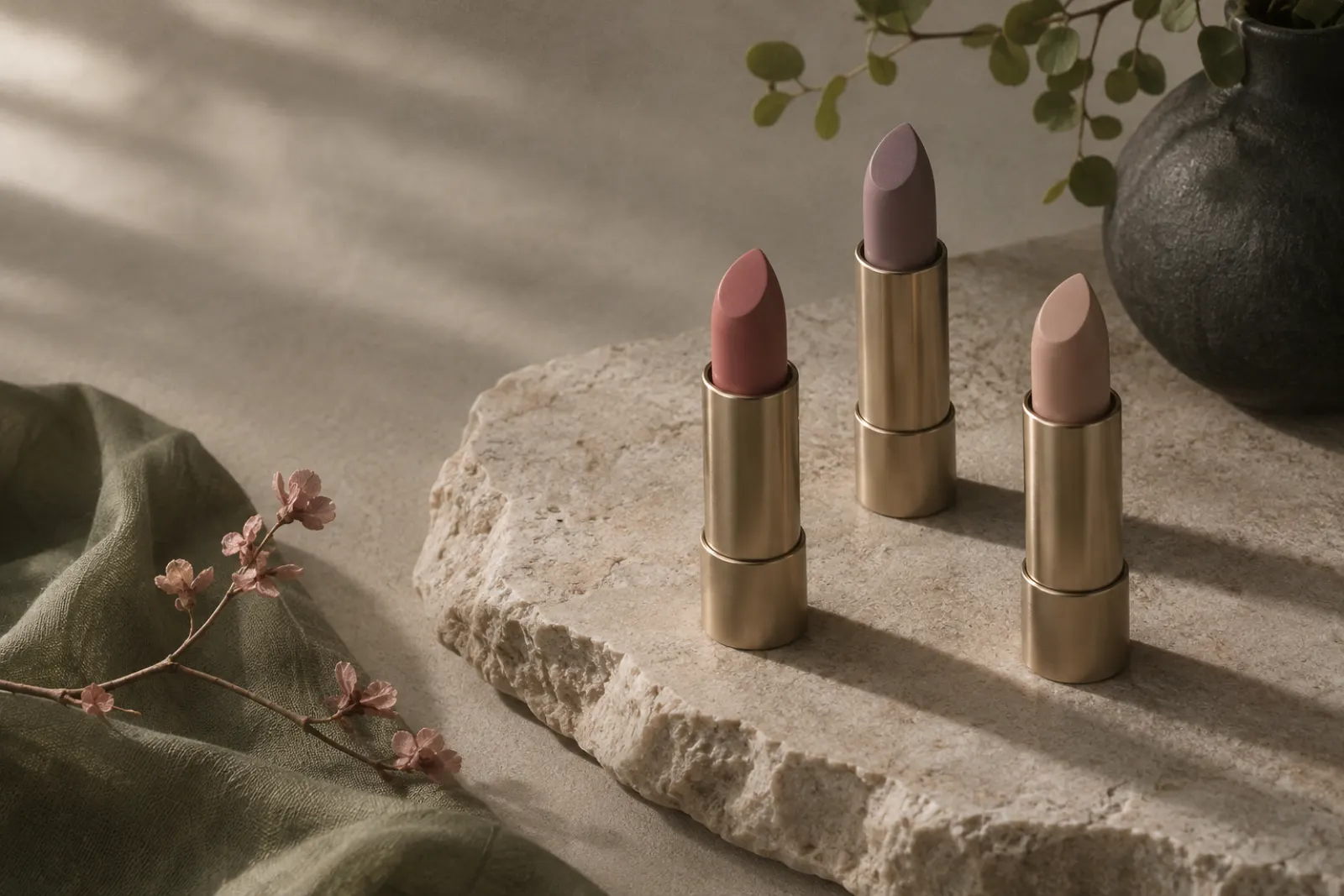
When you pick a lipstick, the shade gets most of the attention. The finish matters just as much. The same rose or brick red can look sharp and graphic in matte, soft and lived-in in satin, or fresh and youthful as a gloss. Finish also decides how a lipstick feels by mid-afternoon, how it copes with a humid MTR commute and how often you will be reaching for a mirror. Here is a practical guide to the main finishes and how to choose between them.
The three main finishes
Most lip products fall somewhere along a line from flat to shiny. It helps to know what each end of that line offers.
- Matte has little or no shine. Colour tends to be strongly pigmented and lasts longer, and long-wear liquid formulas set to a dry film. The trade-off is comfort: mattes can feel tight and will show dry patches and fine lines.
- Satin (sometimes called cream or semi-matte) sits in the middle. It has a soft sheen, good colour and a more cushioned feel. For most people it is the easiest everyday finish.
- Gloss gives high shine and usually sheerer colour. It makes lips look fuller and smoother, feels comfortable, and fades or transfers fastest.
Between these you will also find sheers, tinted balms, stains and shimmer or metallic finishes. Stains are worth a mention: they tint the lips rather than coat them, so they fade gently instead of wearing off unevenly.
Matching finish to your lips
The condition of your lips often matters more than fashion.
- Dry or textured lips: satin, sheer and gloss finishes are kinder. If you love matte, try a creamy or "soft matte" formula rather than a fully drying liquid.
- Thin or less defined lips: a touch of gloss in the centre of the lower lip catches the light and adds a sense of volume.
- Full lips: every finish works. Matte in a deep shade gives a strong, defined look.
- Uneven natural colour: matte and satin formulas cover best. Glosses and balms let more of your own lip tone show through.
Preparation makes every finish look better. Apply a simple lip balm a few minutes beforehand and blot away the excess before colour goes on. If your lips are often cracked, sore or peeling, that is worth raising with a pharmacist or doctor. This is general information, not medical advice.
Matching finish to your day
Think about where you are going and how much time you want to spend on touch-ups.
- Long workdays and meals out: long-wear matte or a stain holds up best through coffee, lunch and conversation.
- Office and everyday: satin is a reliable choice. It looks polished and fades evenly, so a quick reapplication from the tube is enough.
- Weekends, hiking trails and travel: a tinted balm or sheer gloss is low-effort. Look for a lip product with SPF when you are outdoors, as lips burn easily under Hong Kong's high UV.
- Evenings: a bold matte or a high-shine gloss over colour both read well in low light and photographs.
Masks are still part of life for some people on crowded commutes or during flu season. If that is you, a stain or transfer-resistant matte will survive far better than gloss.
Hong Kong weather and finishes
The local climate has an effect too. In humid summer months, glosses can feel sticky and attract hair on windy days, and creamy formulas may slide at the edges. A lip liner applied all over the lip before your lipstick gives colour something to grip. In heavily air-conditioned offices, and in the drier months from late autumn, mattes can feel especially parching. Switching to satin or layering a thin balm under a matte can help.
A few habits suit every season:
- Blot with a tissue after the first layer, then apply a second for longer wear.
- Keep an edge clean with a little concealer on a small brush.
- Store lipsticks away from direct sun and hot cars, as heat softens the bullet and can change the texture.
Mixing finishes
You do not have to commit to one finish. Pressing a sheer gloss over the centre of a matte adds dimension without losing staying power. A stain under a balm gives colour that lasts beneath a comfortable feel. And a satin lipstick tapped on with a fingertip turns into a softer, blurred version of itself. Mixing finishes is an easy way to get more from the lipsticks you already own.
Next steps
For more ideas, browse the lip and colour edit at Makeup on the shelf and look after your lips between wears with eye and lip care. If you want to understand what goes into a formula, our guide to reading an ingredient list is a good place to start, and you can find more application advice in Makeup.