September in Hong Kong still feels like summer. The light is strong, the air is heavy, and the weekends fill up with ridge walks, junk trips and lazy afternoons at the beach. Sunscreen you put on at eight in the morning won't still be protecting you at three in the afternoon, especially once sweat, sea water and towels have had a go at it. A little planning makes a real difference to how your skin feels on Monday.
Why outdoor days are different
A normal weekday mostly means short walks between the MTR and air-conditioned buildings. Outdoor days mean hours in the sun with very little shade, and a few things work against you:
- Reflection. Water, sand and pale concrete bounce light back up onto your face, under the chin and around the nose.
- Sweat and humidity. On an exposed trail in the heat, sunscreen breaks down and slides off faster than you think.
- Wind and water. A breeze on a junk deck feels cool and hides how much sun you're getting. Swimming and towelling off remove most of what you applied.
- Midday hours. The strongest UV usually comes around the middle of the day, which is exactly when most outings are in full swing.
Our guide to sunscreen for Hong Kong explains UV levels and labels in more detail.
Choosing a formula for the day
For long days outside, go for a broad-spectrum sunscreen with a high SPF. If you'll be swimming or sweating, choose one labelled water resistant. Texture matters too, because you're far more likely to reapply something you like wearing.
- Hiking: a lightweight fluid or gel that doesn't sting if it runs into your eyes. Some people find mineral filters such as zinc oxide gentler around the eyes.
- Junk trips and beach days: a water-resistant lotion for face and body, plus a stick or balm for the nose, ears and lips.
- Under makeup: if you're heading on to dinner afterwards, a thin layer that sits well under base saves you starting again. See our makeup section for ideas.
Avoid trying a new product for the first time on a big day out. Test it on a small patch of skin during the week, especially if your skin reacts easily.
How much, and how often
Most people apply far less than the amount used in SPF testing. Some practical habits:
- Apply about 15 minutes before you leave, to clean, moisturised skin.
- For the face and neck, a common guide is two finger-lengths of product. Use generous handfuls for the body.
- Don't forget the ears, the back of the neck, your hairline parting, the tops of your feet and the backs of your hands.
- Reapply roughly every two hours, and straight away after swimming, heavy sweating or towelling off, whatever the label claims.
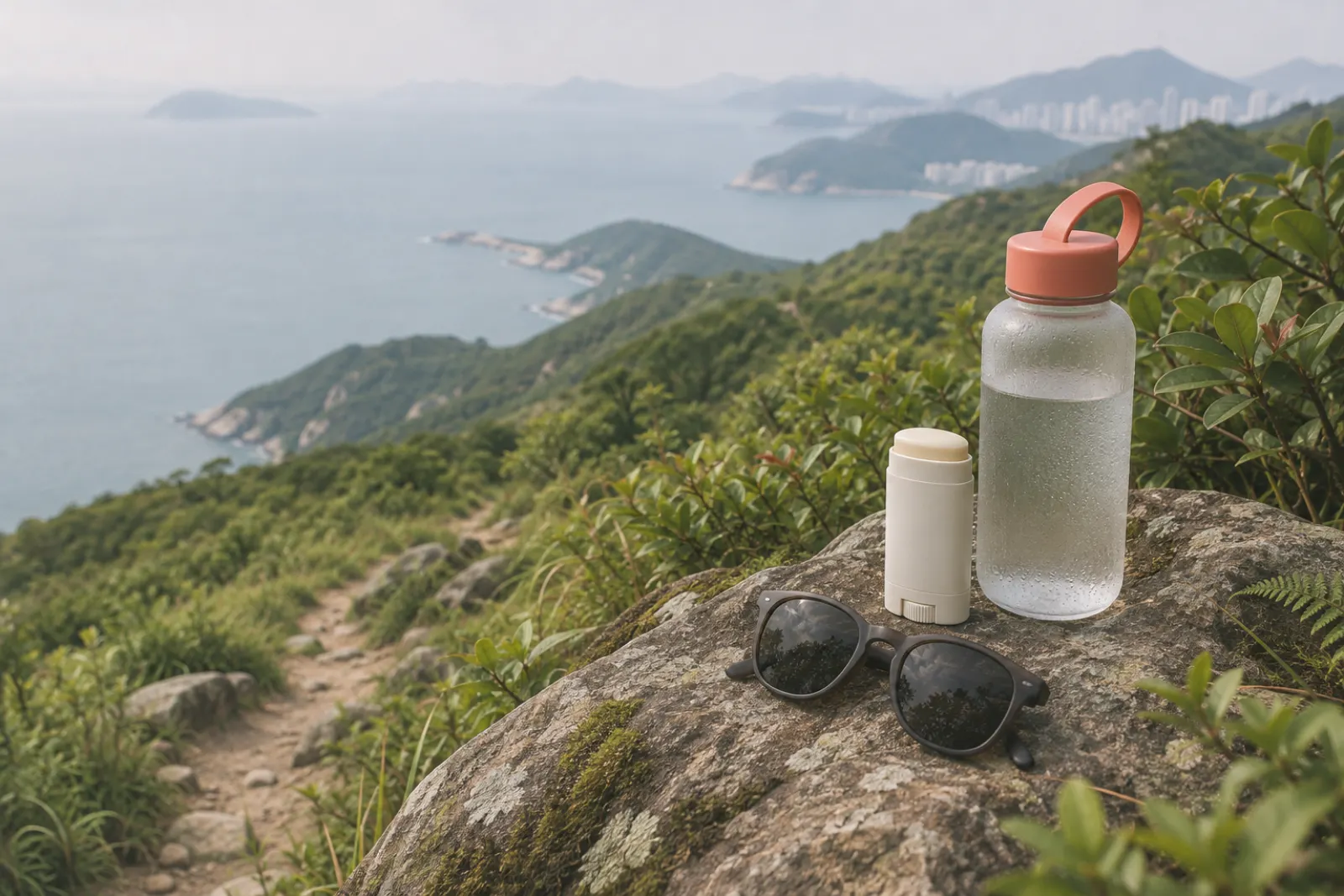
A small travel-size bottle in a hip pocket or daypack makes reapplying much easier. A sunscreen stick is quick to swipe on at a trail viewpoint without unpacking anything.
Beyond the bottle
Sunscreen works best as one part of a wider plan:
- A wide-brimmed or legionnaire-style hat for exposed trails, and close-fitting sunglasses.
- Lightweight long sleeves or a rash guard for swimming and paddleboarding.
- Shade breaks: a pavilion on the trail, the covered area of the junk, an umbrella on the sand.
- Plenty of water. Overheating and dehydration are real risks on Hong Kong trails in late summer.
- A lip balm with SPF, as lips burn easily and are often missed.
After the sun
At the end of the day, cleanse gently to remove sunscreen, salt and sweat. Water-resistant formulas may need a cleansing oil or balm first. Then use a simple moisturiser. Soothing ingredients such as aloe, panthenol and calendula can feel comfortable on warm skin. It's a good idea to skip strong exfoliating acids or retinol for a night or two if your skin feels tender.
This is general information, not medical advice. If you have a burn that blisters, feel unwell after time in the sun, or notice a mole or patch of skin changing, speak to a pharmacist, doctor or dermatologist.
Next steps
Browse the sunscreen shelf for formats suited to outdoor days, see body care for after-sun basics, and read our guide to building a skincare routine to fit sun protection into every day, not just weekends. You'll find more seasonal reading in the Journal.