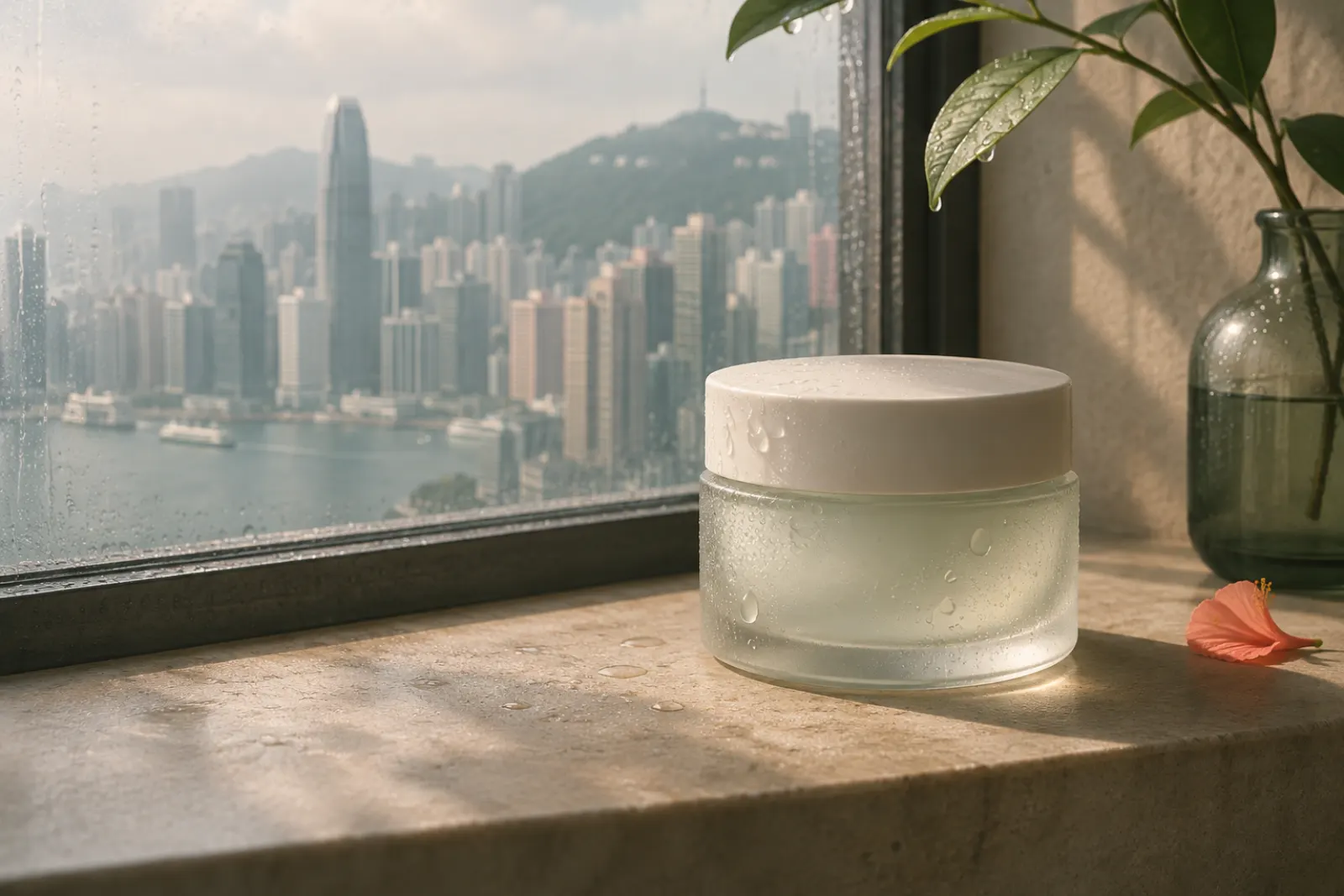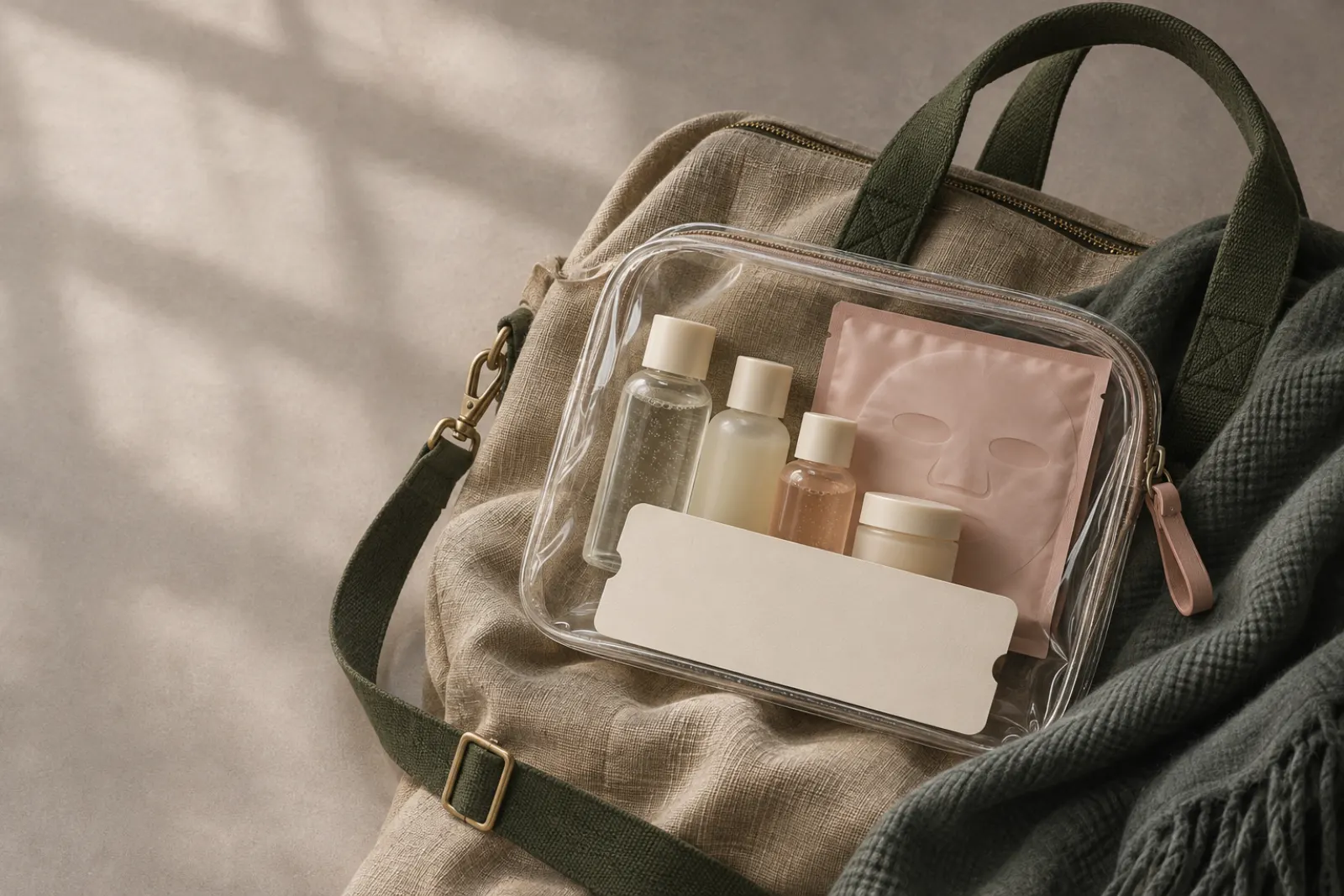
Step out of an MTR station on an October morning and the air still feels thick. Spend eight hours at a desk under a ceiling vent, though, and by three o'clock your cheeks may feel tight, your foundation may be catching on flaky patches and your lips may need constant attention. A lot of Hong Kong skin goes back and forth between muggy streets and cool, dry interiors every day. With a few changes to your routine, that daily swing gets much easier to live with.
Why the office dries you out
Air conditioning cools the air and pulls moisture out of it as well. Indoor air ends up much drier than the air outside, and skin loses water into it more easily, especially from the cheeks, the area around the eyes and the lips. Constant airflow from a vent adds to the effect.
The quick change in temperature and humidity matters too. Skin that has been coping with heat and sweat outdoors suddenly sits in cool, dry air. Some people notice tightness, others dull patches, and others find that their T-zone still turns shiny while their cheeks feel parched. That last pattern is very common, and it is why one heavy cream used everywhere is not always the answer.
Build moisture in layers
Thin layers usually work better in this climate than one rich layer, which can feel heavy on the commute. A simple order:
- Gentle cleanse. A low-foam or cream cleanser leaves more of the skin's natural oils in place. If your skin squeaks after washing, it has probably been over-cleansed.
- A watery layer. A hydrating toner or essence on slightly damp skin helps with comfort. Humectants such as glycerin and hyaluronic acid draw water into the upper layers of the skin.
- A moisturiser that seals. Look for barrier-supporting ingredients such as ceramides, squalane or panthenol. A gel-cream suits combination skin, and a richer cream suits skin that is dry all over.
- Sunscreen. It is still needed for the commute and for sitting near windows, and many modern formulas add a little extra comfort.
If you are combination, you can apply more moisturiser to your cheeks and less to your forehead and nose.
Small habits at your desk
What you do during the day can matter as much as your morning routine.
- If you can, move your seat or angle your screen so the vent does not blow straight at your face.
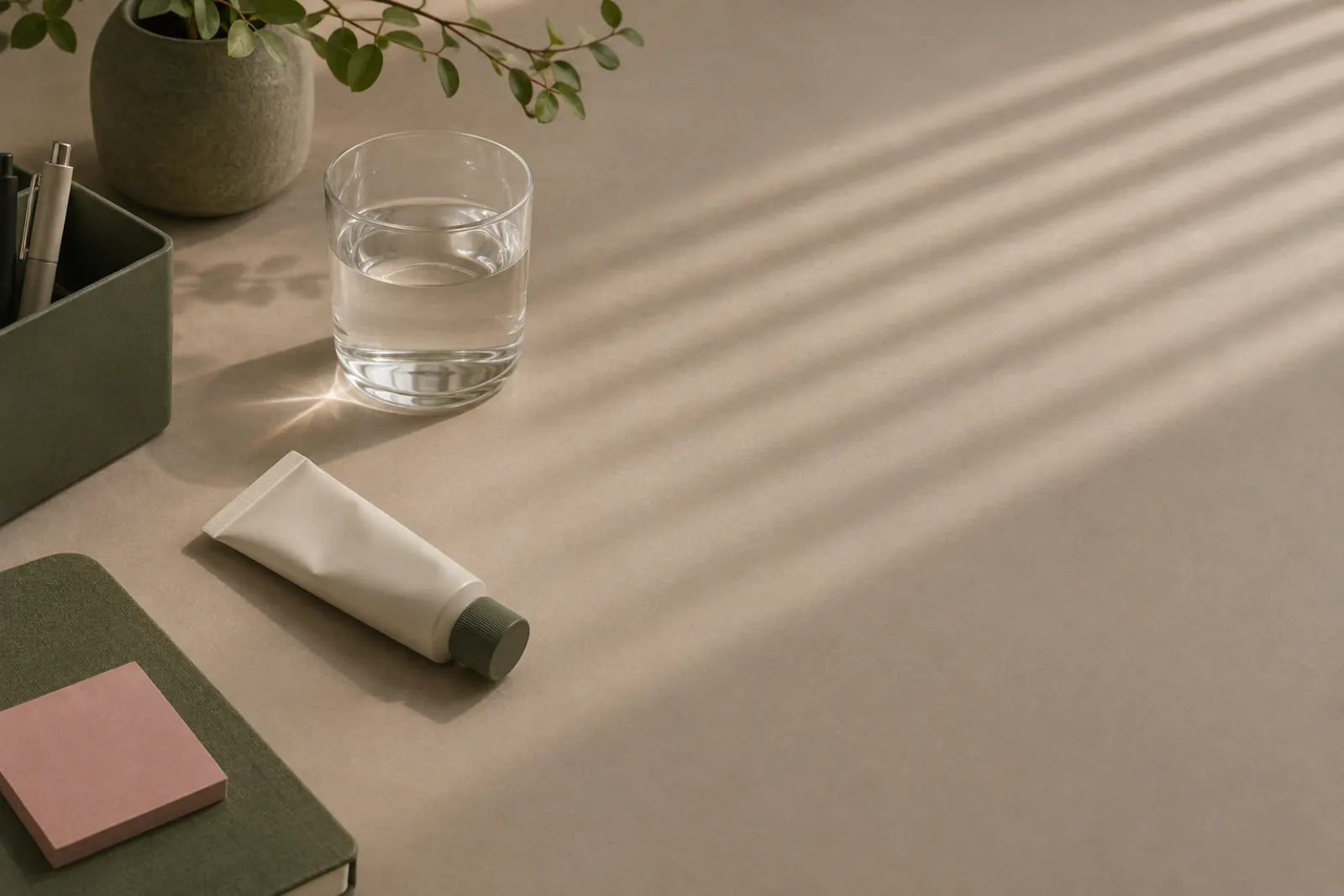
- Keep a small tube of hand cream and a lip balm in your drawer. Hands that are washed often under dry air crack quickly.
- Facial mists feel refreshing, but water on its own can evaporate and leave skin feeling tighter. If you use one, press a little moisturiser or balm on top afterwards.
- Drink water regularly. It will not fix dry skin by itself, but it helps general comfort through a long day.
- A small desk humidifier, if your office allows one, can make your immediate surroundings feel softer.
Go gently with actives
Dry, air-conditioned conditions can make skin less tolerant of strong exfoliants and retinoids. If you use retinol or acids such as glycolic acid, think about cutting back to fewer nights a week during the cooler months and always following with a moisturiser. Stinging, redness or peeling are signs to scale back. Our guide to using actives without irritation explains how to pace them.
Evenings and weekends
Night-time is your chance to recover. A slightly richer moisturiser, or a thin layer of balm over dry patches, can help undo the day's dryness. If you sleep with the air conditioning on, the same approach applies, and a hydrating mask once or twice a week can be a pleasant extra. On weekend hikes, wind and sun can leave skin feeling the same way, so pack sunscreen and a lip balm.
Everything here is general information, not medical advice. If dryness continues despite gentle care, or comes with persistent itching, cracking or a rash, it is worth seeing a pharmacist, doctor or dermatologist.
Next steps
Browse our moisturisers shelf for textures that suit long office days, and see toners and essences for lightweight hydrating layers. If you are rethinking your whole routine, start with how to build a skincare routine. To check a label for humectants and barrier ingredients, read how to read an ingredient list.