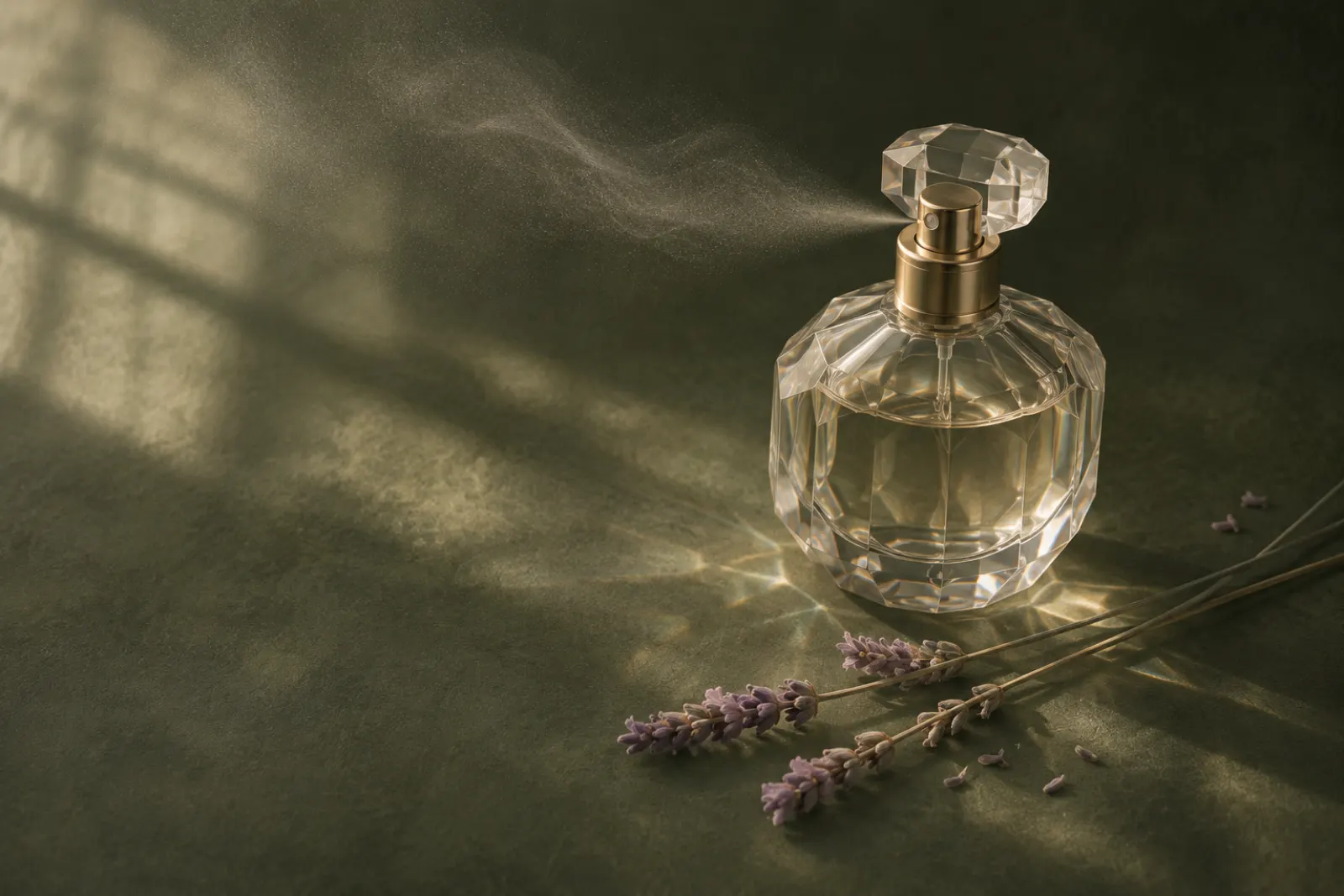
Most of us learnt how to wear perfume by watching someone else do it. A parent dabbing behind the ears, a friend spritzing the air and walking through it, a counter assistant rubbing a tester strip between their fingers. Some of these habits help. Others quietly waste a good bottle. Here are five common beliefs that are worth letting go of, with a few practical habits to try in their place.
Myth one: rubbing your wrists together helps the scent settle
This may be the most common habit of all, and it does little good. Rubbing creates friction and warmth, and that can hurry the lighter top notes through their stage. Those top notes are the bright, fresh opening you probably liked when you first smelt the fragrance, so you lose some of it.
Try this instead:
- Spray once on each wrist, or on the inside of the elbow, and leave it alone.
- Give it a minute to dry before your sleeves or watch strap touch it.
- If you have sprayed too much, blot gently with a tissue rather than rubbing.
Myth two: you can smell it, so everyone else can too
After a while, most people stop noticing their own fragrance. Our noses adapt to a smell that stays the same, which is why your home seems to have no smell to you but does to guests. If you keep spraying until you can smell it again, colleagues on a crowded MTR carriage may notice it long before you do.
A simple rule helps. Settle on a set number of sprays, two to four for most eau de parfum strengths, and stick to it whether or not you can still detect the scent by lunchtime. If you want to know whether it has lasted, ask someone you trust.
Myth three: the bathroom shelf is a fine place to keep it
Perfume bottles look lovely beside the basin, but bathrooms are about the hardest place to keep them. Heat, light and changes in humidity can all affect a fragrance over time. In Hong Kong flats, where a steamy shower can be followed by hours of air conditioning, the swings are bigger than you might think.
Better places include:
- A bedroom drawer or cupboard, away from the window.
- The original box, which shields the bottle from light.
- Somewhere away from radiators, heaters and sunny sills.
A fragrance that smells sharper or flatter than it used to, or has clearly changed colour, may simply have aged. Storing it well gives it the best chance of lasting.
Myth four: more expensive means longer-lasting
How long a scent lasts depends on its concentration, what it is made of and your own skin, not on the price. Fresh citrus and green notes tend to fade faster because of what they are, while woods, resins and musks usually linger. A costly cologne may fade before an inexpensive eau de parfum with a warmer base.
Skin matters as well. Dry skin tends to hold on to fragrance less well, so applying an unscented moisturiser first can help it last on the skin. In humid weather, scent can feel stronger and spread further, so a lighter hand often works better from May to September.
Myth five: spraying your hair is a clever trick
Hair does hold scent nicely, and it moves the fragrance around as you do. The trouble is that many perfumes are high in alcohol, which can feel drying on lengths that are already coping with humidity, sun and frequent washing. If you like the idea, mist the fragrance onto a hairbrush and run it through the ends, or use a product designed for hair.
Remember too that fragrance is a common cause of skin irritation for some people. If you notice redness or itching where you apply it, try spraying onto clothing instead, after checking for staining on a hidden spot first. This is general information, not medical advice. If a reaction persists, speak to a pharmacist, doctor or dermatologist.
On the shelf
None of this means you have to be precious about perfume. Pick a sensible number of sprays, keep the bottle somewhere cool and dark, and let your skin do the rest. If you are thinking about a new scent, our guide to choosing a fragrance explains notes and concentrations, and the fragrance shelf lists the basics worth knowing. For more about scent alongside your makeup routine, visit Makeup and fragrance, or browse more stories in the Journal.